Crystal care
How to Tell Real Crystals From Fake
Dyed glass, resin, and synthetic stones are everywhere — sold cheerfully alongside the real thing, often at genuine-crystal prices. None of this needs special equipment to spot. A few honest checks, and you'll know what you're actually holding.
01Colour
Real crystals tend to be a little uneven — natural stone rarely settles on one perfectly uniform shade all the way through. If a piece is an unusually saturated, flawless colour, especially something like a very intense "amethyst" purple or a candy-bright "rose quartz" pink, that evenness is often the tell. Dye also has to go somewhere: look closely at any cracks or fractures for colour pooling darker there than on the surface — a strong sign it was painted on rather than grown in.
02Weight and temperature
Pick it up. Real crystal is denser than glass, resin, or plastic, so it tends to feel heavier than its size suggests. It should also feel genuinely cool against your skin and take a moment to warm up — stone is a poor conductor of heat. Glass and resin warm up almost instantly, which is a quick, easy check with nothing more than your own hand.
03Shape and imperfections
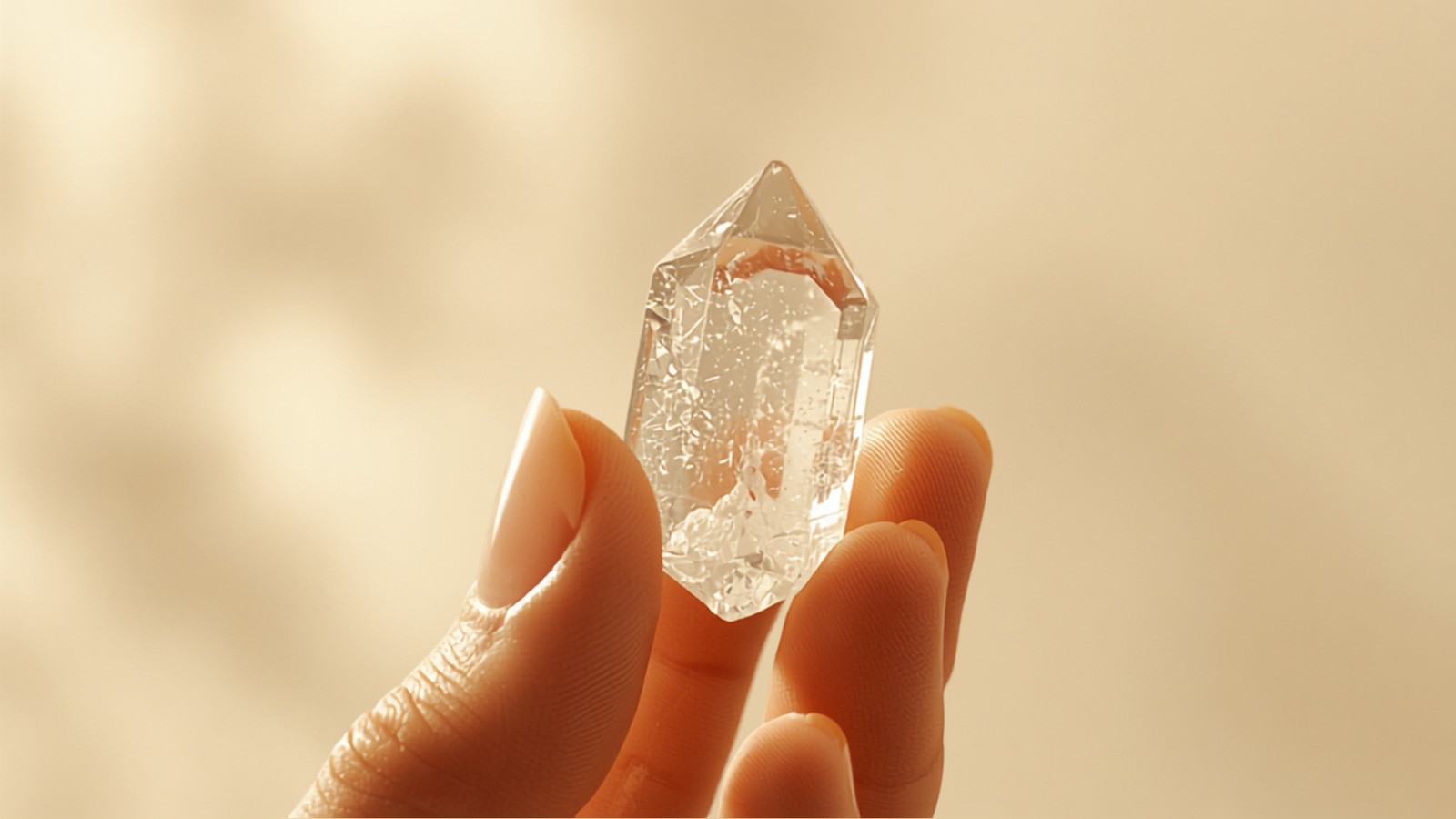
Nature isn't a machine. Real crystals carry small blemishes, slightly uneven edges, the odd internal fracture or inclusion — genuine variation piece to piece. Fakes, especially cast glass, often look a little too perfect: symmetrical, flawless, sometimes with tiny trapped air bubbles, which simply don't occur in stone formed under natural pressure.
04The scratch test
Most genuine crystals are harder than glass. Very gently, try drawing an inconspicuous edge of the stone across a spare piece of glass (the back of an old picture frame works well). If it leaves a visible scratch, that's a real point in its favour. If the stone itself scratches instead, you're very likely holding glass.
None of this replaces a proper appraisal from a gemologist if you're making a significant purchase — but for everyday crystal buying, these four checks together will catch almost everything. It matters to us specifically because every reading from our quiz points you toward a real stone, not a decorative one — worth knowing the difference when you go looking for it.